 MUSTER
Development note 001
MUSTER: Minesweeper with Teeth
· CapLock Games
MUSTER starts with the calm logic of a numbered grid, then puts a party of adventurers underneath it. You are not only clearing a board. You are digging up the people and equipment that will have to survive what comes next.
The clue is incomplete
In classic Minesweeper, a number counts nearby mines. In MUSTER, a number counts both nearby foes and valuable finds without identifying which is which. The information is true, but incomplete, and that is where each run starts to become its own story.
You can flag suspicious tiles, spend limited shovels to open new ground, or use a lantern for a safe reveal. Uncovering a monster can force a fight. Uncovering loot or a recruit can change what your warband is capable of. The same clue can pull you toward caution and curiosity at once.
Dig up the party
Some of the figures buried in a barrow are diggers waiting to be freed. Recruits come with distinct battlefield roles, while recovered weapons and charms let you reshape how they work together. The excavation is therefore doing two jobs: solving the floor and assembling the team.
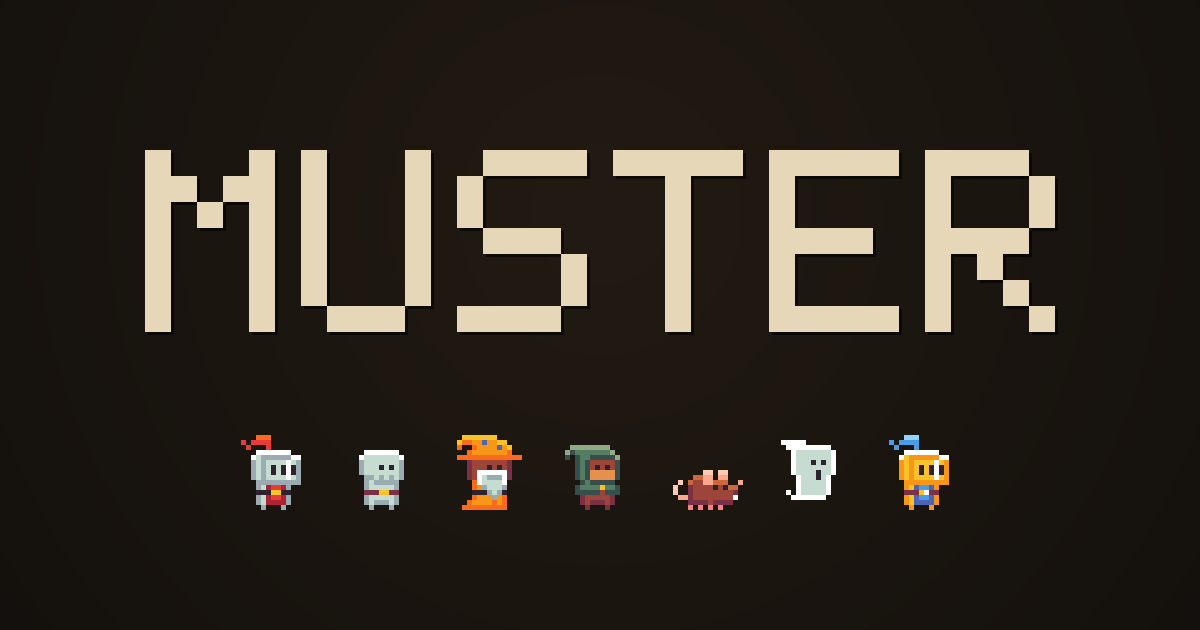
The animated lineup on the site is a glimpse of that cast—fighters, creatures, and stranger things waiting below. We want every new silhouette to suggest a different problem before you know exactly what it can do.
Then let the plan fight
When the warband reaches battle, you deploy it on a hex grid and choose the opening. Combat then runs automatically. Positioning, range, abilities, and equipment turn the decisions you made underground into a result you can watch unfold.
That connection is the idea at the center of MUSTER: deduction should not end when the board is solved. Every dig should leave you with a stronger plan, a stranger party, or a problem you now have to carry into the next room.
MUSTER is a single-player roguelite in development for Windows, macOS, and Linux. This devlog will follow the mechanics, milestones, and lessons along the way.