 MUSTER
Development note 003
Read, Recruit, Deploy: How MUSTER Plays
· CapLock Games
A run of MUSTER moves through three connected decisions. First you read uncertain ground. Then you decide what kind of warband to build from it. Finally, you choose the formation that will carry that warband into an automatic fight.
01 · Read the ground
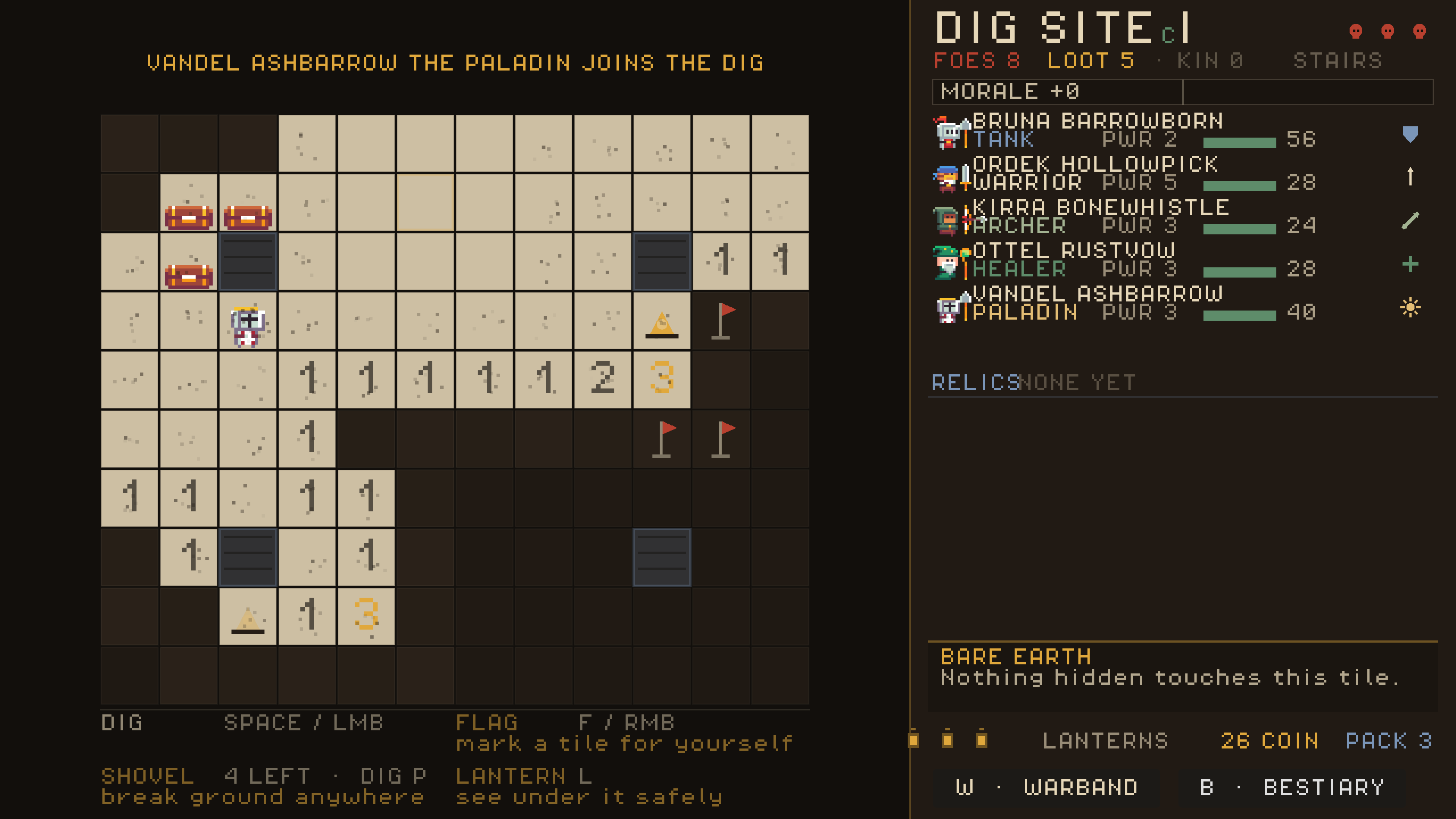
The excavation starts with a familiar language: numbers on a grid. Each number tells you how many neighboring tiles still hide something important—but “important” can mean a foe or a valuable find. You know how much is nearby, not what it is.
That mixed clue is the heart of the risk. Flags let you mark suspicious ground, while limited shovels and lanterns give you ways to turn partial information into a plan. Sometimes the safe-looking move is only the least bad wager.
02 · Build the warband
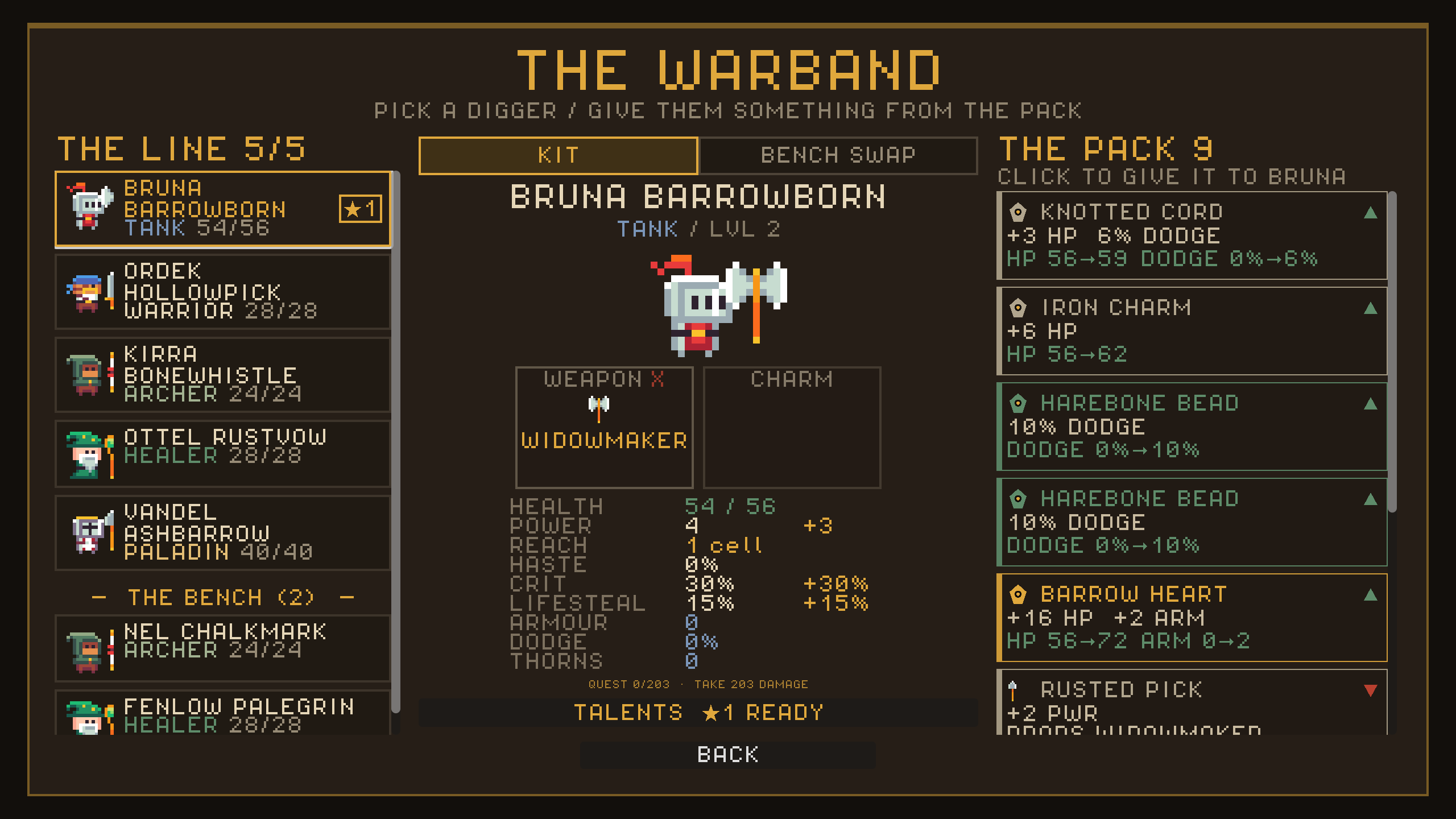
The useful things under the soil are not just weapons and charms. Some tiles hold buried diggers who can join the run. Free them, choose who belongs in the active warband, and decide where the best equipment will have the greatest effect.
Eight roles give the roster its shape. A find that looks modest on its own can become the piece that changes how the whole group works, so the excavation and the party-building are really one decision seen from two angles.
03 · Choose the opening
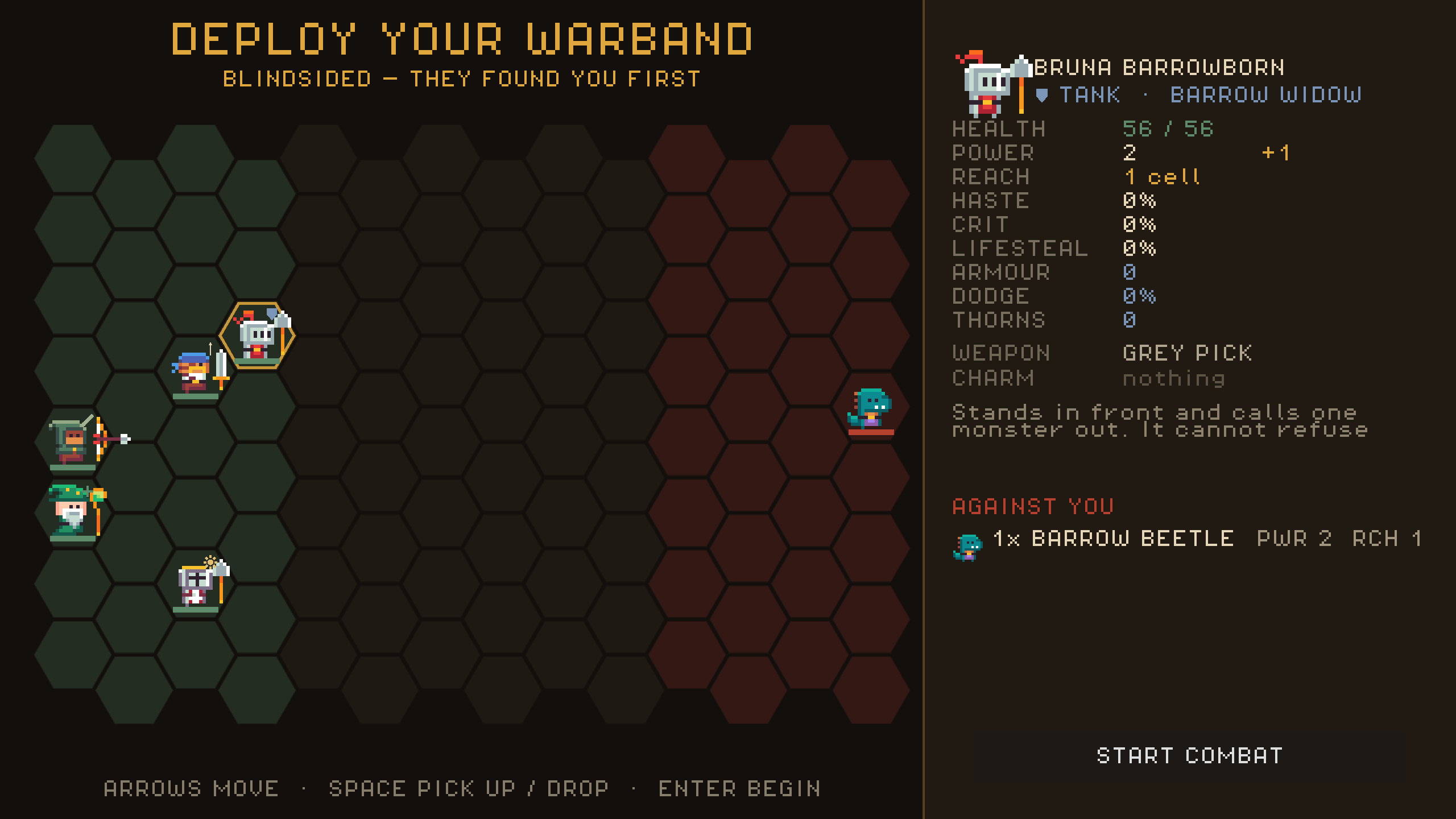
Before combat begins, you arrange the warband on a hex grid. Once the fight starts, it runs automatically. Positioning, reach, equipment, and class abilities decide what happens, which makes deployment your last clean chance to shape the result.
That is the loop we want to keep sharpening: clues create uncertainty, excavation creates possibilities, and formation turns those possibilities into a bet. Then the battle shows you what the bet was worth.
MUSTER is in development for Windows, macOS, and Linux. We’ll keep using these notes to show the systems as they take shape.